
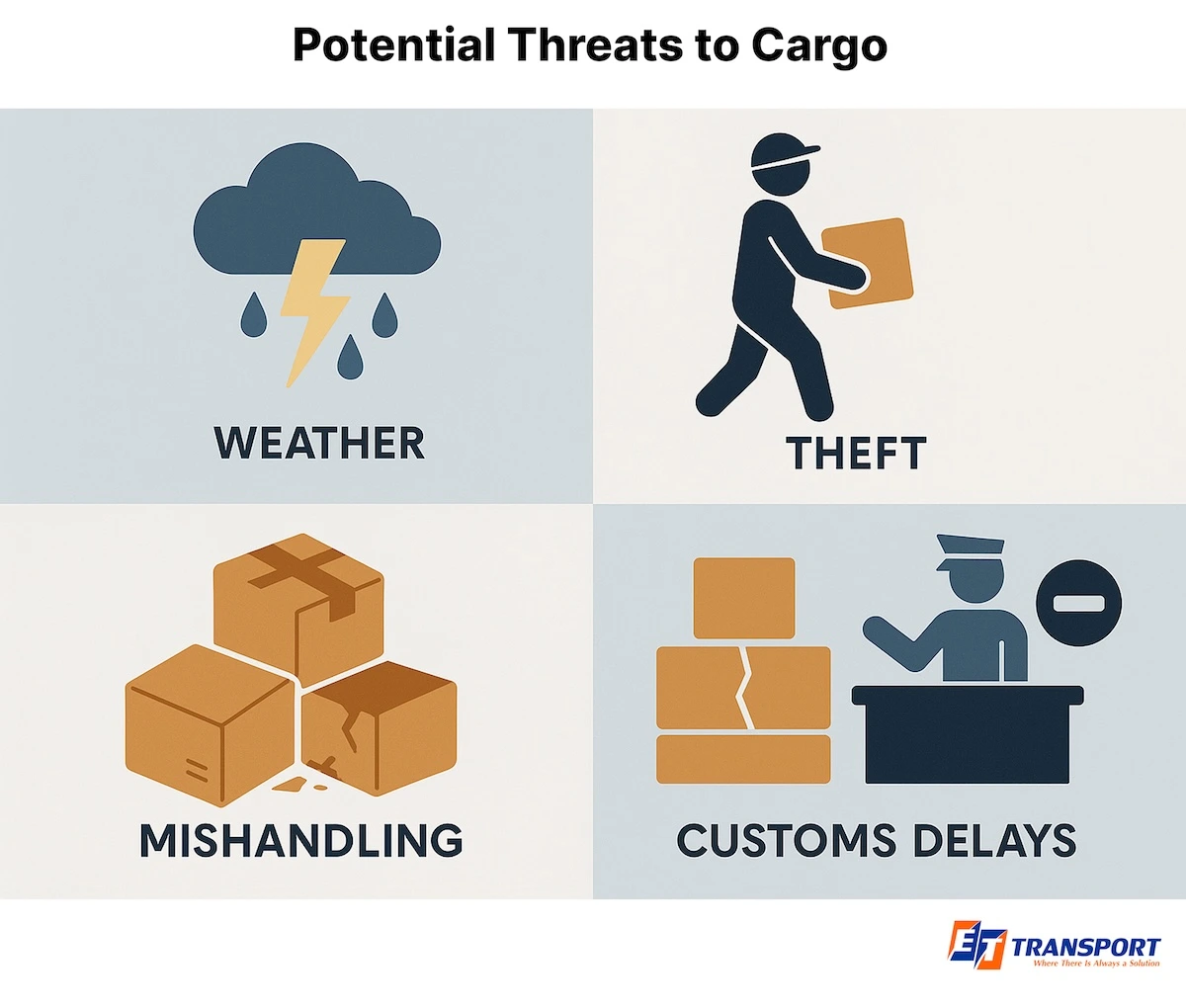
Goods in transit are exposed to a range of disruptions that can cause delays, damage, or even complete loss. These include physical mishandling, weather conditions, theft, equipment failures, and customs-related slowdowns. For companies that rely on the timely delivery of goods, these issues can result in financial losses, strained partnerships, and damage to brand credibility.
Protecting goods in transit is essential to maintaining reliable, secure freight shipping. This guide explores the key risks involved in cargo transportation and outlines practical strategies businesses can adopt to prevent delays, damage, or loss. From packaging to compliance, it focuses on proven steps that keep freight moving securely across Canada and beyond.
What Does Goods in Transit Protection Involve?
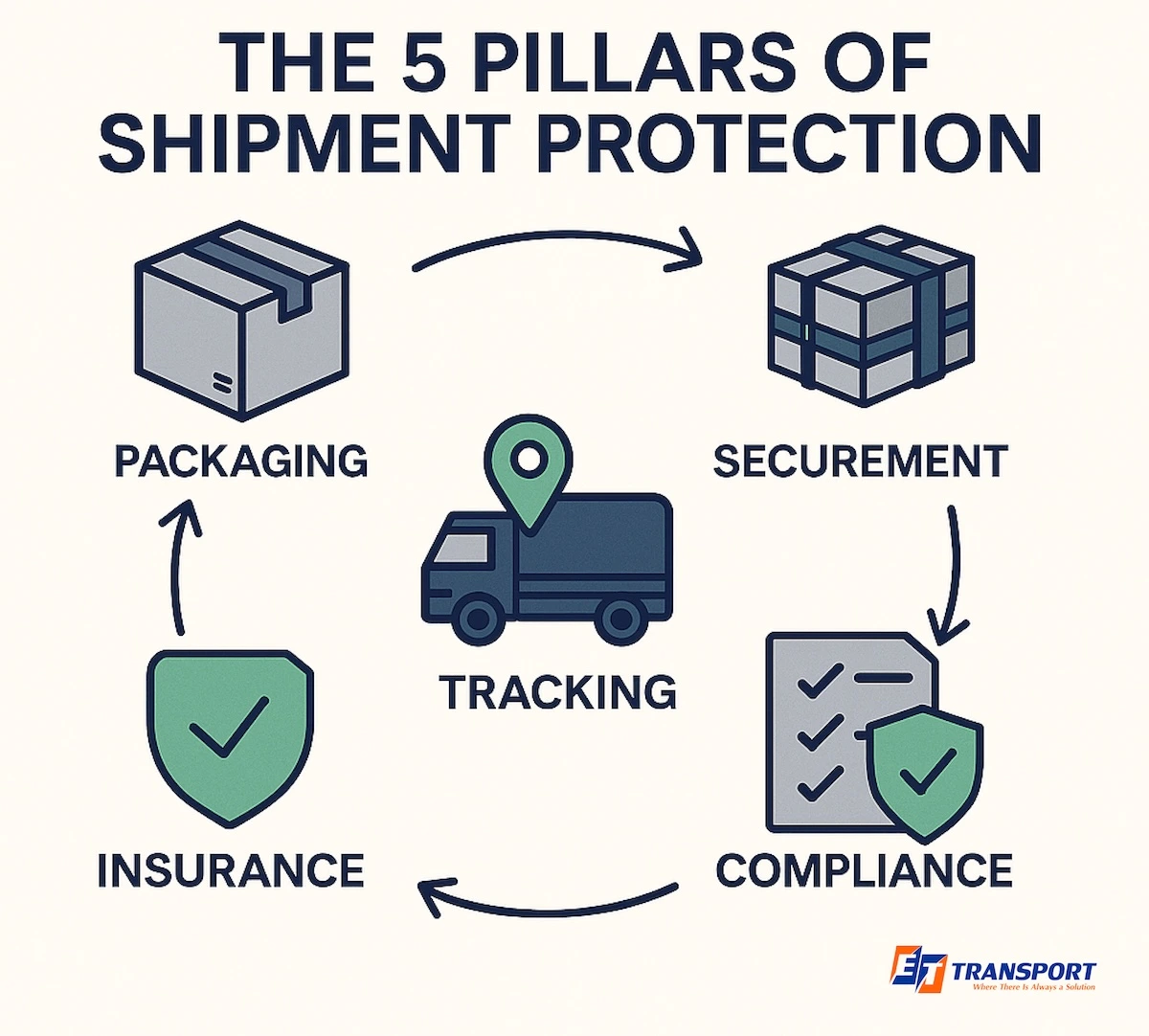
Goods in transit protection refers to measures taken to ensure cargo reaches its destination safely and intact. These include:
These measures are crucial for ensuring safe freight shipping and minimizing freight claims.
Why Cargo is Vulnerable
Cargo can be compromised due to:
These vulnerabilities increase the need for robust freight protection services and shipment protection strategies. These vulnerabilities highlight why it’s essential to protect goods in transit with reliable packaging, securement, and monitoring strategies.
Who is Responsible for Cargo Protection?
Cargo safety is shared among three parties:
Carrier liability protection is typically limited, making additional cargo insurance in Canada a necessary coverage.
ET Transport’s Approach to Goods in Transit Protection
The following protection measures set ET Transport apart in protecting goods in transit throughout every journey.
Certifications & Compliance
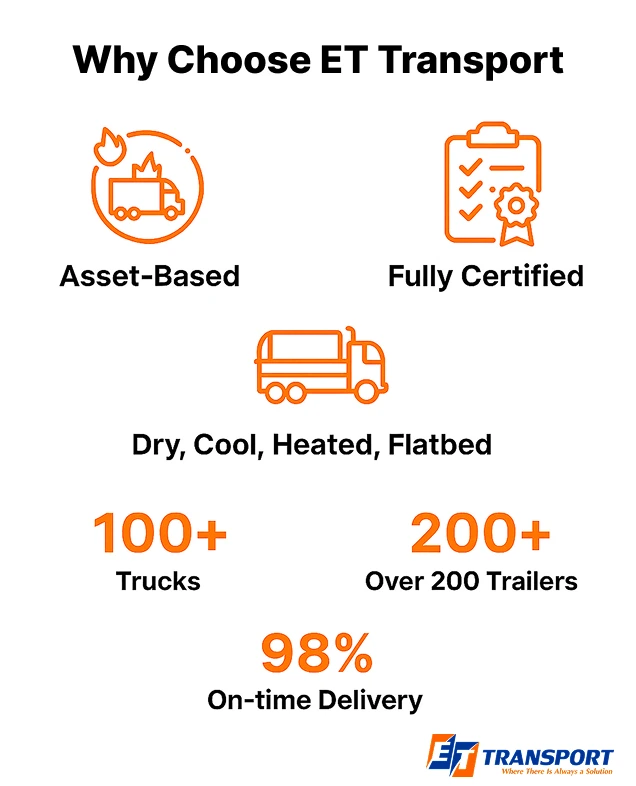
ET Transport is bonded and certified under C-TPAT, PIP, FAST, ACI, and CSA. These credentials ensure reduced inspections, streamlined border processes, and secure cross-border shipping.
Fleet & Trailer Types
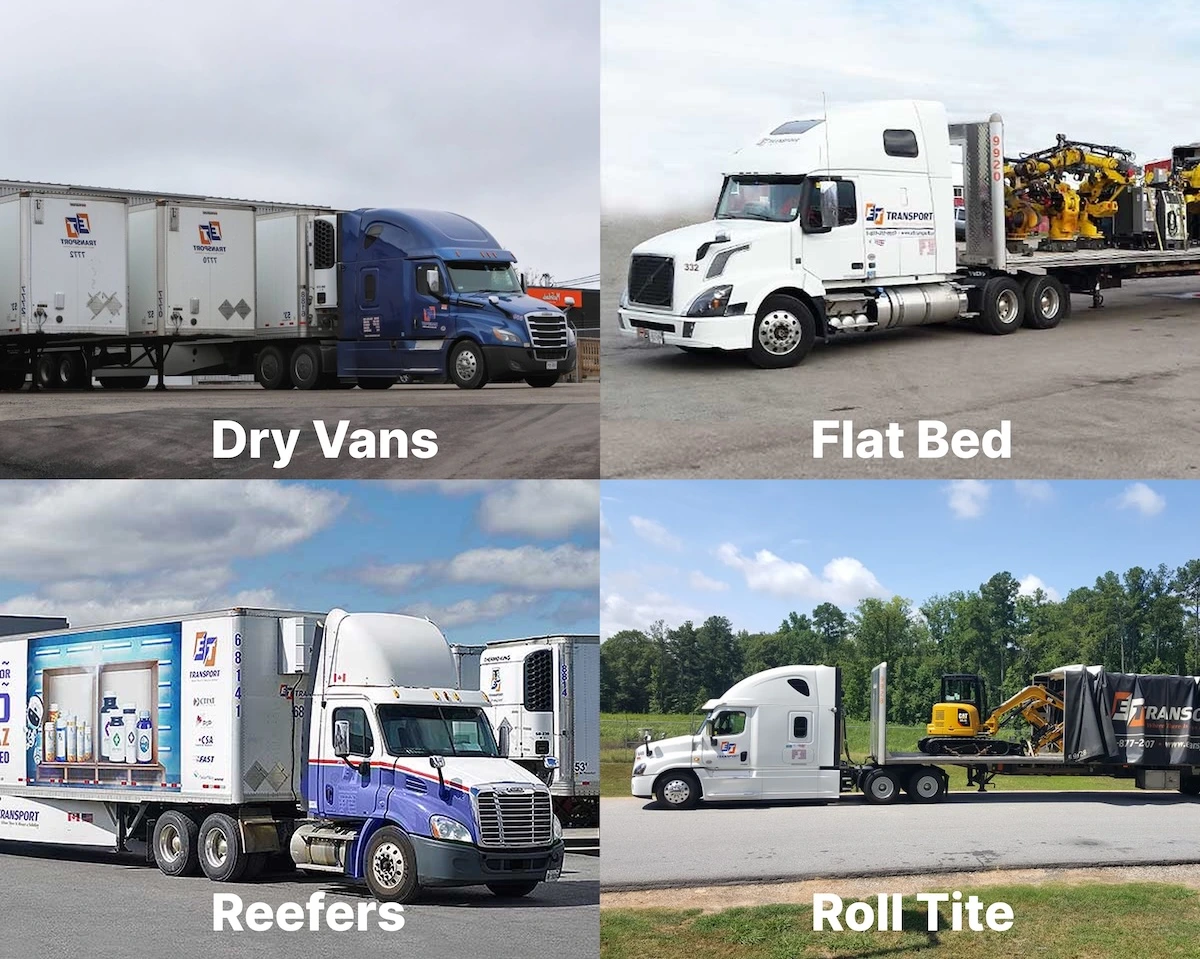
ET maintains over 100 trucks and 200+ trailers, including:
Specialized trailers prevent load shifting and temperature damage.
Securement Protocols
Strict securement practices are followed:
These practices align with freight claims prevention standards.
Real-Time Tracking
Shipments are tracked via GPS and monitored by dispatch teams. ET Transport uses 24/7 satellite tracking and geofencing alerts to maintain shipment protection.
Driver Safety & Equipment Checks
Drivers receive mandatory training in:
Routine vehicle inspections reduce equipment-related disruptions.
Risk Reduction at Hubs
Reducing risks during loading, unloading, and warehouse transitions is crucial. ET Transport addresses this through efficient hub-based operations.
Cross-Docking
ET Transport offers cross-docking to minimize handling time. Fewer touchpoints reduce cargo exposure to damage. This streamlined process also boosts delivery speed by removing unnecessary warehouse stops.
Container Destuffing
ET Transport performs container destuffing in secure indoor environments. This reduces theft exposure and ensures proper handling, especially during the unloading of mixed or palletized goods.
Insurance & Liability
Insurance covers financial risks that remain even after all protective measures are in place.
Carrier Liability vs Insurance
Standard carrier liability offers limited coverage based on weight. Shippers are encouraged to obtain third-party freight insurance in Canada for full-value protection.
Freight Claims Handling
ET Transport provides a structured claims process: clients must inspect shipments upon arrival, report issues promptly, and submit documentation. Repeated issues trigger internal audits.
Exclusions to Note
Insurance may not cover:
Cross-Border & Secure International Shipping
Navigating customs and borders is a critical step in protecting freight moving between Canada and the US. ET Transport addresses this by combining compliance and speed.
These measures ensure shipments move securely and efficiently, minimizing delays, reducing exposure to damage or theft, and strengthening overall freight protection services.
Need a carrier that values safety and reliability? Get a freight quote from ET Transport and ship with confidence.
Frequently Asked Questions
1. How to reduce the risk of cargo damage in Canada?
Use proper packaging, padding, and securement methods. Choose bonded carriers with real-time tracking and insurance options.
2. Does ET Transport offer cargo insurance?
ET Transport provides standard liability coverage, but third-party cargo insurance is recommended for full-value protection.
3. Are hazardous materials treated differently?
Yes. Hazmat shipments follow strict packaging, labeling, and regulatory procedures beyond standard cargo protocols.
Final Thoughts
Learning how to protect goods in transit requires more than just transportation services. It demands proper handling, certified compliance, real-time visibility, and responsive support. Businesses that prioritize these areas significantly lower the risk of cargo loss or damage.
Need help planning a safer freight shipment? Contact ET Transport today!