
FOB stands for Free on Board, a shipping term that defines ownership, shipping costs, and the transfer of liability from the seller to the buyer during transit.
In simple terms, FOB shipping terms determine:
Choosing the wrong FOB agreement can lead to unexpected shipping costs, customs complications, insurance disputes, and delivery delays. That’s why businesses involved in importing or exporting goods must fully understand the way free on board shipping works before signing supplier or freight contracts.
In this guide, we explain what FOB means in shipping, how FOB pricing works, and how businesses can reduce shipping risks while improving logistics efficiency.
FOB Meaning in International Trade Shipping
In international trade, FOB is an official Incoterms published by the International Chamber of Commerce (ICC). It is commonly used in global trade agreements to define the transfer of shipping responsibility between the seller and the buyer.
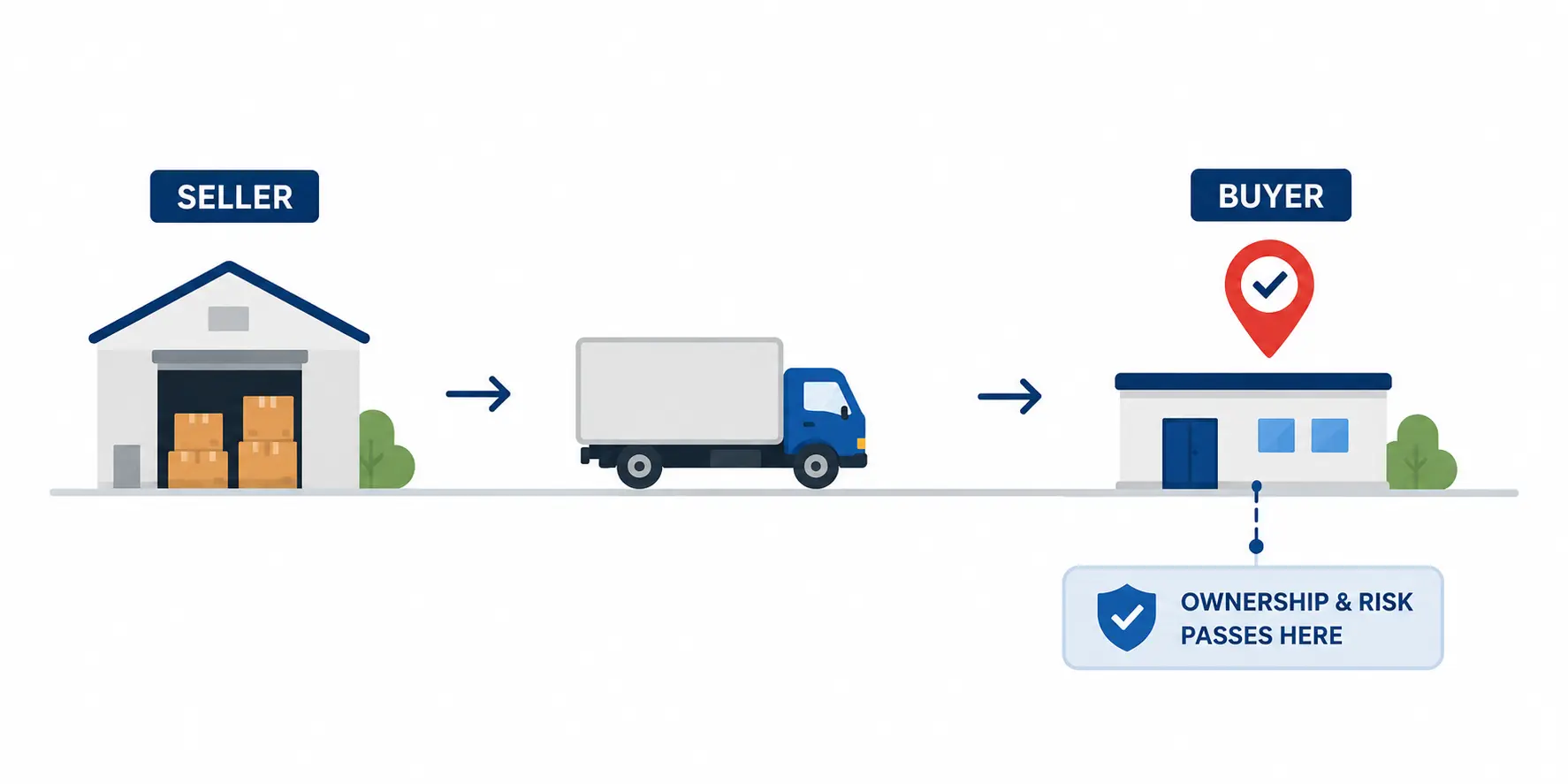
Under free on board shipping terms:
FOB is mainly used for ocean freight, sea cargo, and inland waterway transportation. For air, rail, or truck shipments, businesses usually use FCA (Free Carrier) because it is better suited to multimodal transport.
FOB Shipping Point vs FOB Destination
1. What is FOB Shipping Point?
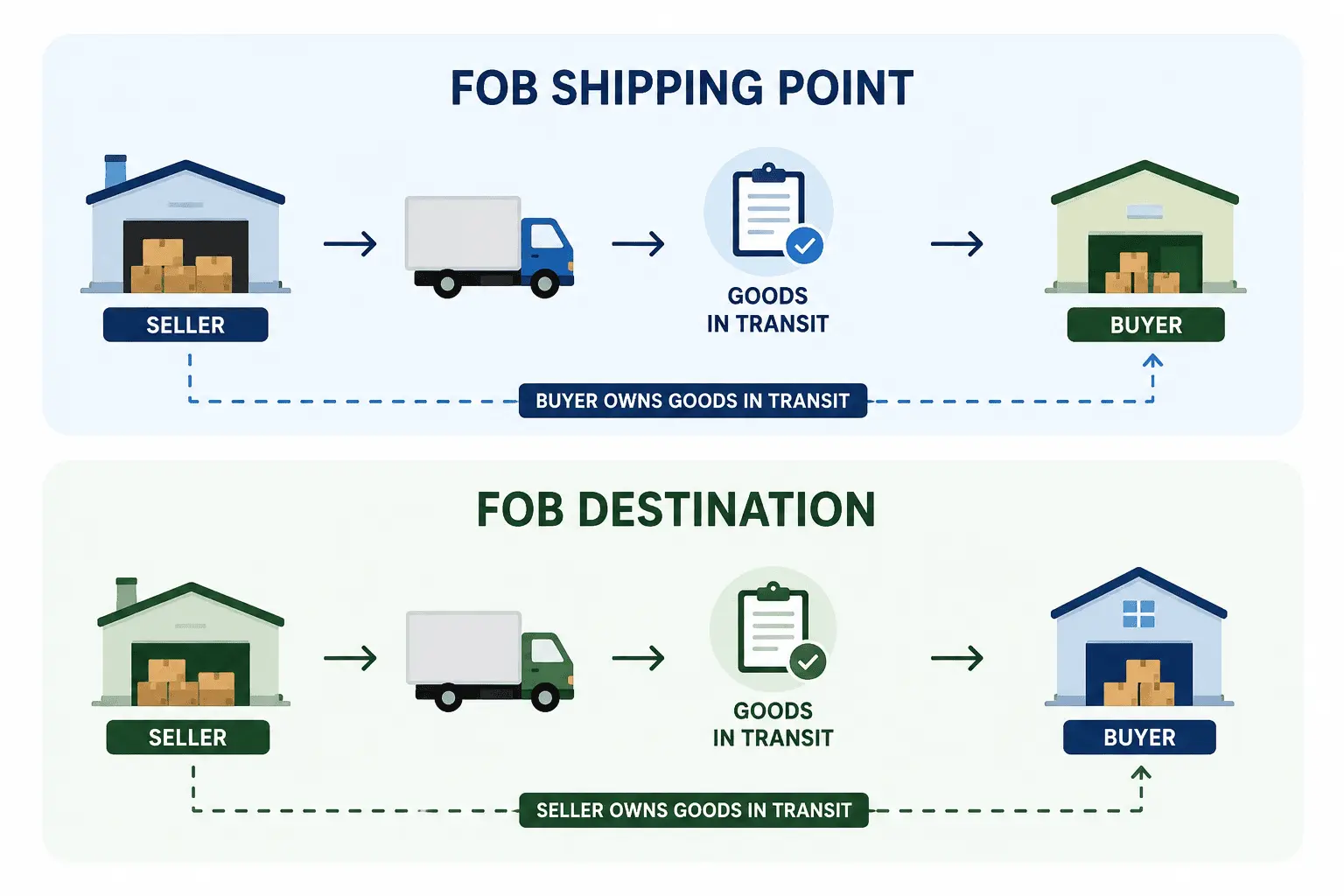
FOB shipping point, also called FOB origin, means the buyer becomes responsible for the goods as soon as the goods leave the seller’s location or are loaded onto the carrier.
Under FOB shipping point:
Because the buyer assumes more responsibility, FOB origin pricing often results in lower product prices than FOB destination pricing.
2. What is FOB Destination?
FOB destination means the seller remains responsible for the shipment until the goods reach the buyer’s specified delivery location.
Under FOB destination:
This arrangement offers lower shipping risk for the buyer, but product pricing may be higher because the seller includes transportation and liability costs in the agreement.
|
FOB Term |
Ownership Transfer |
Who Pays Freight? |
Risk Transfer |
|
FOB Shipping Point |
Buyer owns goods once shipped |
Buyer |
Buyer assumes risk at origin |
|
FOB Destination |
Buyer owns goods after delivery |
Seller |
Buyer |
|
FOB Origin, Freight Collect |
Buyer owns goods at pickup |
Buyer |
Buyer |
|
FOB Origin, Freight Prepaid |
Buyer owns goods at pickup |
Seller prepays freight |
Buyer |
|
FOB Destination, Freight Collect |
Seller owns goods until delivery |
Buyer pays on arrival |
Seller |
|
FOB Destination, Freight Prepaid |
Seller owns goods until delivery |
Seller |
Seller |
How to Calculate FOB Value in Shipping Bill
Step 1: Determine Product Cost

Include:
Step 2: Add Export Costs
Include:
Step 3: Add Port & Loading Charges
Include:
Step 4: Exclude International Freight
Do not include:
Seller Responsibilities Under FOB
Under free on board shipping terms, the seller is responsible for preparing and delivering the goods to the agreed shipping point before the cargo is loaded onto the vessel. Seller responsibilities under FOB usually include:
The seller’s responsibility ends once cargo is loaded onto the vessel under FOB origin terms.
Buyer Responsibilities Under FOB
After the shipment is loaded and risk transfers, the buyer becomes responsible for managing the remaining transportation process and related costs. Buyer responsibilities under FOB typically include:
Many experienced importers prefer FOB shipping because it gives them greater control over freight operations, carrier selection, shipping routes, and overall transportation costs.
Advantages of FOB Shipping
1. Better Freight Control
Buyers can select their own freight forwarder and negotiate better rates.
2. Lower Shipping Costs
FOB often provides more transparent freight pricing compared to supplier-controlled shipping methods.
3. Clear Risk Transfer
FOB shipping terms clearly define when liability changes hands. This reduces disputes between buyers and sellers.
Disadvantages of FOB Shipping
1. More Complexity for Beginners
FOB shipping can be difficult for new importers because they must manage freight coordination, customs processes, and insurance arrangements on their own.
2. Higher Buyer Responsibility
Under FOB origin terms, buyers assume responsibility early in the shipping process, including transit risk, cargo claims, and insurance coverage.
3. Increased Transit Risk
Because ownership transfers before delivery, buyers may face unexpected costs if shipments are delayed, damaged, or lost during transit.
FOB vs Other Incoterms
FOB is one of the most commonly used Incoterms in international shipping, but it is not the only option.
|
Incoterm |
Seller Responsibility |
Buyer Responsibility |
Risk Transfer Point |
|
FOB |
Seller delivers and loads cargo onto the vessel at the origin port |
Buyer pays ocean freight, insurance, and final delivery costs |
Once cargo is loaded onboard |
|
CIF |
Seller pays freight and insurance to the destination port |
Buyer handles import clearance and local delivery |
Once cargo is loaded onboard |
|
EXW |
The seller only makes goods available at their location |
Buyer manages pickup, export, freight, insurance, and delivery |
At the seller’s facility |
|
DDP |
Seller handles the entire shipping process, including duties and delivery |
The buyer only receives the shipment |
Upon final delivery |
|
CPT |
Seller pays transportation to the destination |
Buyer assumes risk during transit and handles insurance |
When goods are handed to the carrier |
Final Thoughts
Understanding FOB shipping terms is essential for any business involved in international trade.
The right FOB agreement helps businesses reduce shipping costs, manage transportation risks more effectively, and simplify overall logistics planning.
For complex cross-border shipments, working with an experienced logistics provider like ET Transport can help ensure smoother transportation and more predictable shipping costs.
Frequently Asked Questions
1. What does FOB mean in shipping?
FOB stands for Free on Board. It defines when ownership, risk, and freight responsibility transfer from seller to buyer.
2. What is FOB in shipping?
FOB is an international shipping term used to determine who pays freight costs and who assumes shipping risk.
3. Who pays for shipping in FOB shipping point?
Under FOB shipping point, the buyer pays freight charges after the goods leave the seller’s facility.
4. How to calculate FOB value in a shipping bill?
Use this formula:
FOB\ Value = Product\ Cost + Inland\ Freight + Export\ Charges + Port\ Handling
5. What does FOB destination mean in shipping?
FOB destination means the seller remains responsible for the shipment until delivery to the buyer.
6. What does free on board shipping point mean?
It means ownership and risk transfer to the buyer once goods are loaded onto the shipping carrier.
7. What does FOB price mean in shipping?
FOB price refers to the total product cost up to the point goods are loaded onto the vessel at the origin port.