
Customs clearance in Canada is the approval process required for goods entering or leaving the country. It involves ensuring shipments comply with Canadian import and export regulations. It also includes submitting the required documents and paying applicable duties and taxes to the Canada Border Services Agency.
Whether you are a first-time importer or managing regular shipments, understanding the customs clearance process in Canada is critical. It helps you avoid delays, penalties, and unexpected costs that can impact your supply chain.
In this guide, you will learn everything you need to know about customs clearance for imports. This includes the process, required documents, charges, and best practices to ensure smooth and compliant shipping.
What is Customs Clearance in Canada?

Customs clearance in Canada goes beyond basic approval. It is a structured process where the Canada Border Services Agency reviews shipments to confirm they meet all legal and regulatory requirements.
During this process, authorities verify that:
For businesses, this stage is critical. Even small errors in classification or documentation can lead to delays or additional costs in the customs clearance process in Canada.
Why Customs Clearance Matters for Businesses
Customs clearance in Canada is essential for any business involved in importing or exporting goods. It directly affects delivery timelines, costs, and overall supply chain efficiency.
A well-managed customs clearance process in Canada reduces risks and avoids unnecessary costs. It also helps businesses maintain smooth operations and meet customer expectations.
Documents Required for Customs Clearance in Canada
Accurate documentation is a key part of the customs clearance process in Canada. Missing or incorrect paperwork is one of the most common causes of delays in customs clearance.
Having the right customs clearance Canada documents ensures faster processing and reduces the risk of penalties or shipment holds during customs clearance for import shipments.
Customs Clearance Process Canada (Step-by-Step)
The customs clearance process in Canada follows a structured sequence. Each step must be completed correctly to avoid delays, penalties, or additional costs.
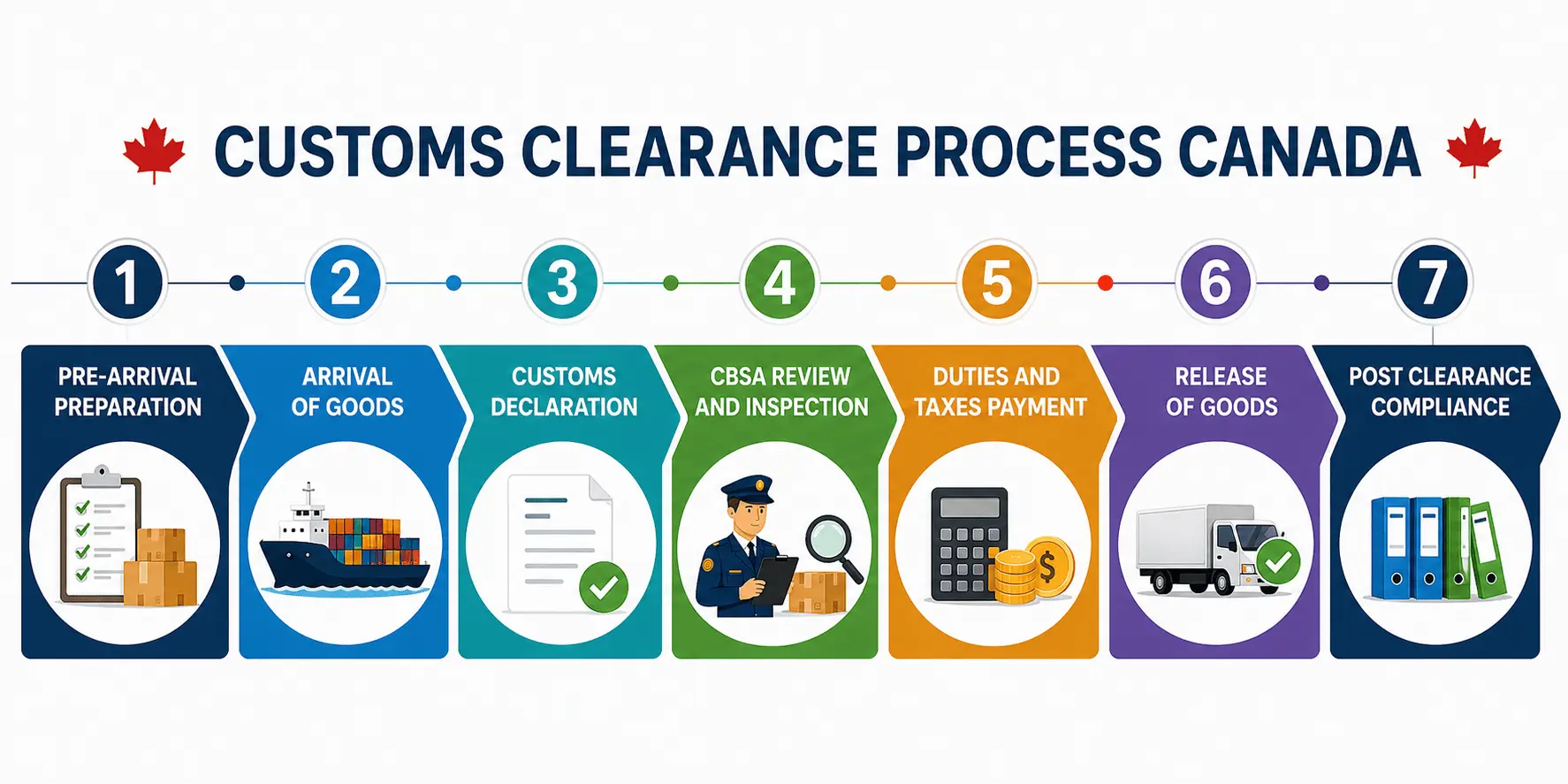
1. Pre-arrival preparation
This is the most important stage. Errors here often lead to delays later.
Using these programs helps speed up the customs clearance process in Canada and reduces the risk of delays at the border.
2. Arrival of goods
The shipment officially enters Canada at a designated port of entry.
This step triggers the customs clearance process.
3. Customs declaration
A formal declaration must be submitted to CBSA for review.
Incorrect details at this stage can result in penalties or shipment holds.
4. CBSA review and inspection
CBSA verifies that the shipment meets all requirements.
Inspections can increase timelines, especially if discrepancies are found.
5. Duties and taxes payment
Applicable charges must be settled before release.
Proper calculation helps control customs clearance charges for import shipments.
6. Release of goods
Once approved, the shipment is cleared for delivery.
At this stage, import customs clearance is considered complete operationally.
7. Post-clearance compliance
Responsibilities continue even after goods are released.
Strong record-keeping ensures long-term compliance and reduces future risks.
Customs Clearance Charges for Import Shipment
Customs clearance charges for import shipments directly impact your total landed cost. Understanding these costs helps businesses plan better and avoid unexpected expenses.
|
Charge Type |
Description |
|
Customs Duties |
Based on the HS code and the country of origin |
|
GST (5%) |
Applied to most imported goods |
|
PST or HST |
Depends on the province of delivery |
|
Brokerage Fees |
Charged for handling import customs clearance |
|
Additional Fees |
Includes storage, inspection, or disbursement charges |
Hidden costs in the customs clearance process for imports often come from delays or incorrect documentation. Proper planning and accurate declarations help reduce these extra charges.
Common Challenges in Customs Clearance
Customs clearance in Canada can become complex if shipments are not prepared correctly. Many delays and extra costs come from avoidable mistakes in the process.
These issues can increase both time and cost during import customs clearance. Proper documentation, accurate classification, and early preparation help reduce risks in the customs clearance process in Canada.
Conclusion
Customs clearance in Canada is a structured process that every importer and exporter must follow. From documentation and classification to duties and final release, each step plays a key role in ensuring compliance and avoiding delays.
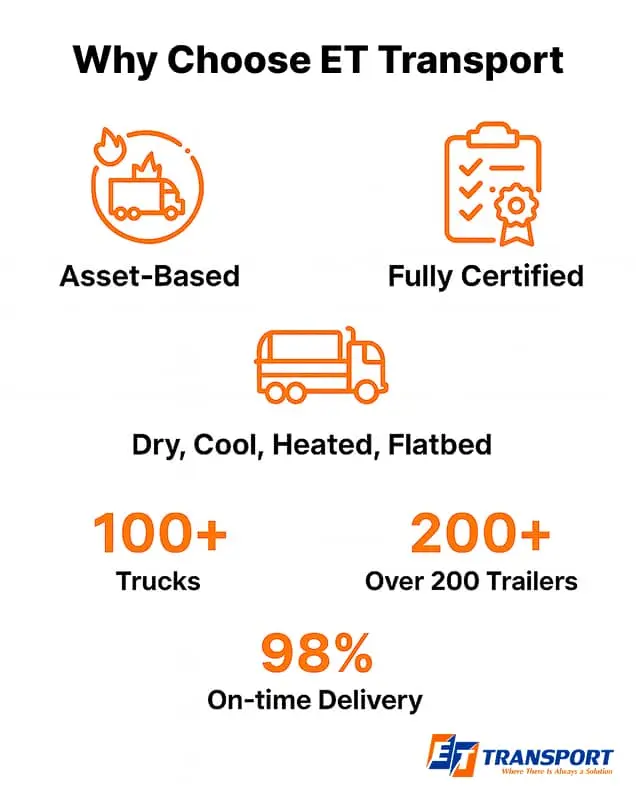
Working with the right logistics partner can make this process faster and more efficient. ET Transport helps businesses simplify cross-border shipping with reliable support and clear guidance. Contact ET Transport to get a tailored quote and a clear plan for your shipments.
Frequently Asked Questions
1. What is import customs clearance?
Import customs clearance is the process of declaring goods to the Canada Border Services Agency, submitting required documents, and paying duties before the shipment is released. It is mandatory for all commercial goods entering Canada.
2. What does import customs clearance completed mean?
Import customs clearance completed means the shipment has been reviewed and approved by CBSA. All duties and taxes have been paid or accounted for, and the goods are released for delivery.
3. What documents are required for customs clearance in Canada?
The main documents for customs clearance in Canada include a commercial invoice, a packing list, a lading bill, a certificate of origin, and import permits, if required. Accurate documents help avoid delays.
4. How long does the customs clearance process in Canada take?
The customs clearance process in Canada usually takes a few hours to one day if the documents are correct.
5. What are the common charges during import customs clearance?
Import customs clearance charges include customs duties, GST, provincial taxes, brokerage fees, and additional costs such as storage or inspection fees. These charges depend on the shipment details and classification.