
Getting an accurate freight quote comes down to one thing: providing complete and correct shipment details from the start.
A quote is only as reliable as the information behind it. Missing dimensions, incorrect weight, or unlisted services can quickly turn a low estimate into a higher final cost.
This becomes even more important when shipping within Canada or handling cross-border moves, where customs, documentation, and additional fees come into play.
Most businesses do not overpay because rates are high. They overpay because their initial quote was incomplete.
If you want a reliable estimate, you need to understand what affects pricing, what information carriers require, and how to properly compare quotes.
What Is a Freight Quote?
A freight quote is an estimate of the total cost to move goods from one location to another. It typically includes:
A freight rate quote is dynamic. It changes based on shipment details, timing, and market conditions.
Why Accurate Freight Quotes Matter
Small errors in freight quoting do not stay small. They show up later as added costs, delays, and operational issues.

What happens when quotes are inaccurate
Why this matters for your business
What accurate quotes enable
Accurate quotes provide real costs rather than rough estimates. This makes it easier to properly compare carriers, secure more competitive and reliable freight rate quotes, and plan your shipments with predictable timelines and budgets.
Key Factors That Affect Freight Quotes in Canada
Every freight quote in Canada is calculated based on a few core variables. Understanding these factors helps you manage costs and avoid pricing surprises.

1. Route and Distance
Distance directly impacts your shipping cost.=
Long-haul shipments require more fuel, longer transit times, and greater coordination, which increases the base rate. This is especially true for cross-country moves compared to regional deliveries.
For example, a cross-Canada shipment will always cost significantly more than a short-distance route.
2. Shipping Type
The type of shipment you choose affects both price and delivery speed.
Choosing between LTL and FTL depends on shipment size, urgency, and budget.
3. Weight and Dimensions
Carriers price freight based on how much space and weight your shipment occupies. Key factors include:
Incorrect dimensions or weight often lead to reweigh charges, which increase your final freight rate quote.
4. Seasonality and Fuel
Freight rates fluctuate throughout the year.
In Canada, winter conditions can slow down transit and increase costs. At the same time, changes in fuel prices and market demand directly affect carrier pricing.
These variables can cause noticeable differences in your truckload freight quote, even for the same route.
5. Cross-Border Requirements
Shipping across the Canada-US border adds another layer of cost and complexity.
In addition to standard freight charges, you need to account for duties, customs clearance, and required documentation. Each of these elements affects both pricing and transit time.
Even small errors in paperwork can hold shipments at the border, leading to delays, added fees, and operational disruption.
Information Needed for an Accurate Freight Quote
Accuracy depends on the quality of the information you provide. Missing or incorrect details will lead to pricing changes, delays, or additional charges.
|
Category |
Details Required |
|
Core Shipment Details |
Pickup and delivery postal codes, business or residential location, commodity type |
|
Packaging Information |
Packaging type, number of pieces, stackability |
|
Dimensions and Weight |
Exact dimensions (L×W×H), total weight, density |
|
Freight Classification |
Freight class based on shipment type |
|
Additional Services |
Liftgate, inside delivery, temperature control |
|
Cross-Border Documents |
Commercial invoice, packing list, certificate of origin if required |
Missing any of these details can result in added charges or delays during transit.
How to Get an Accurate Freight Quote

Getting an accurate quote is not about tools alone. It is about following the right process.
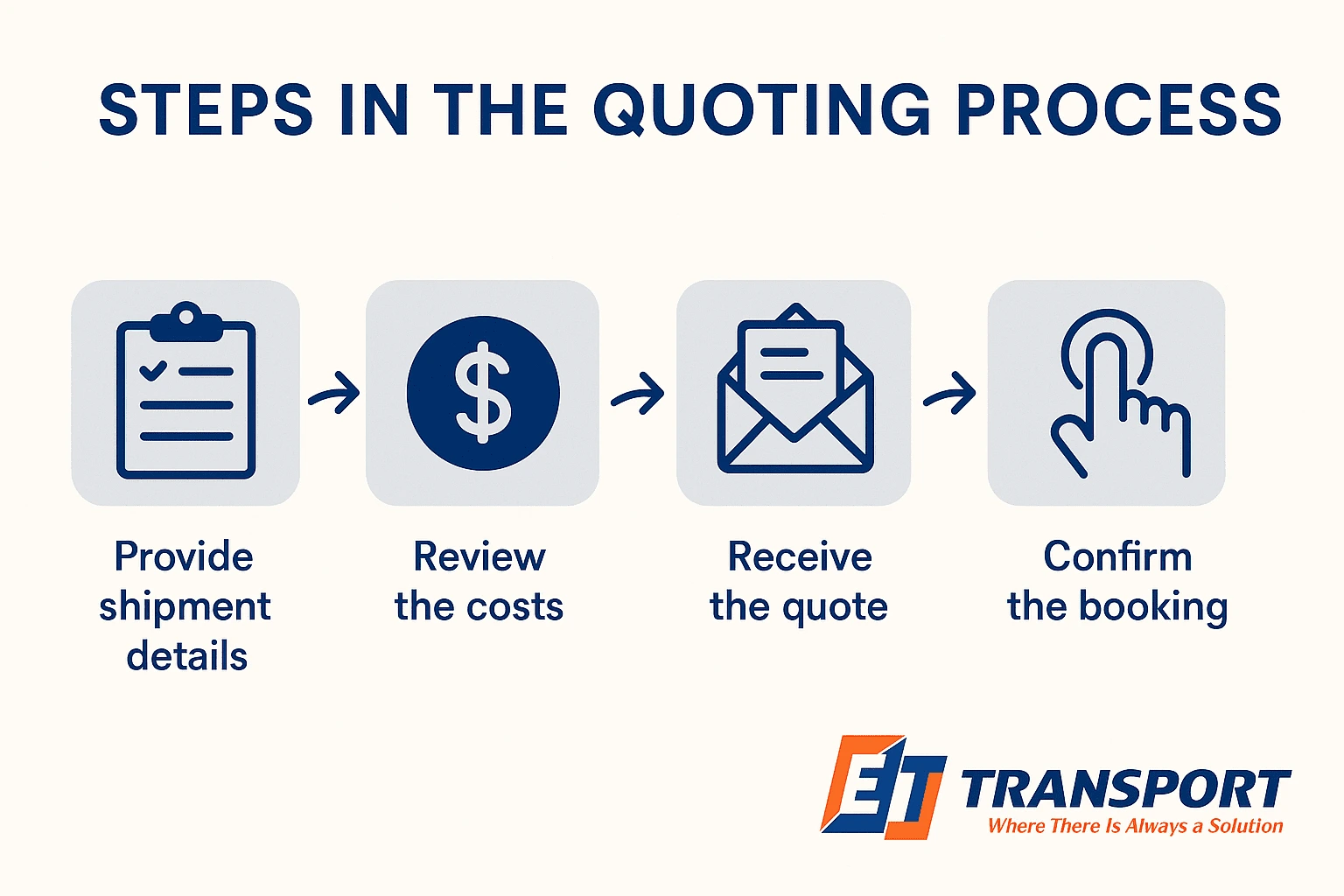
Step 1: Gather Exact Shipment Details
Start with precise data. Estimated weight, dimensions, or missing service requirements will lead to price adjustments, delays, and billing issues later.
Step 2: Use a Freight Quote Calculator
Once your data is ready, use a freight quote calculator to generate initial estimates.
Tools like LTL, FTL, and the international freight quote calculator help you quickly understand pricing based on real inputs. The accuracy still depends on the data you provide.
Step 3: Compare Multiple Quotes
Do not rely on a single quote.
Compare pricing, transit times, and service levels across different freight shipping companies. This gives you a realistic view of the market instead of a single estimate.
Step 4: Understand Total Cost
Focus on total landed cost, not just base rate.
Check:
This is critical for full load freight quotes and cross-border shipments.
Step 5: Confirm and Book Properly
Before finalizing, review everything.
Verify shipment details, confirm timelines, and ensure all required documents are ready. For cross-border shipments, proper documentation and coordination prevent delays.
Freight Quote Calculators Explained
Freight quote calculators are designed to provide you with initial pricing quickly based on your shipment details.

You enter basic information such as shipment size, pickup and delivery locations, and freight type. The tool then generates an instant estimate along with available carrier options and transit times.
These tools are useful for getting a quick freight quote online, especially when comparing multiple options across different lanes.
There are different types of tools depending on your needs, including:
While these tools reduce manual work and speed up decision-making, they are only as accurate as the data you provide. Incorrect inputs will still lead to pricing adjustments later.
Choosing the Right Freight Partner
The freight partner you choose directly affects your costs, delivery timelines, and overall reliability.
For Canadian businesses
ET Transport specializes in domestic and cross-border shipping across Canada and the U.S.
They provide:
This makes them a strong choice for businesses seeking consistent Canadian freight quotes and full-service logistics support.
For US businesses
ET Motor Freight focuses on domestic U.S. freight and cross-border shipping into Canada.
They are well-suited for:
Choosing the right partner reduces operational risk, improves pricing consistency, and ensures your shipments move without unnecessary delays.
The Bottom Line
Getting an accurate freight quote starts with the right data and the right process. When done correctly, it helps you control costs, avoid delays, and make better shipping decisions.
Need a freight partner that delivers accuracy, safety, and reliability? Contact ET Transport and ship with confidence.
Frequently Asked Questions
1. Where can I find a freight quote calculator?
Freight quote calculators are available on logistics company and broker websites. You enter shipment details and get an instant freight quote online with rate and carrier options.
2. What is a freight quote?
A freight quote is an estimation of the cost for transporting goods based on shipment details, distance, and service type.
3. How much does freight shipping cost in Canada?
Freight costs vary by distance, size, and shipment type. A full truckload across Canada typically ranges from CAD 5,000 to CAD 7,000, while smaller shipments cost less.